Your Health, Our Insights
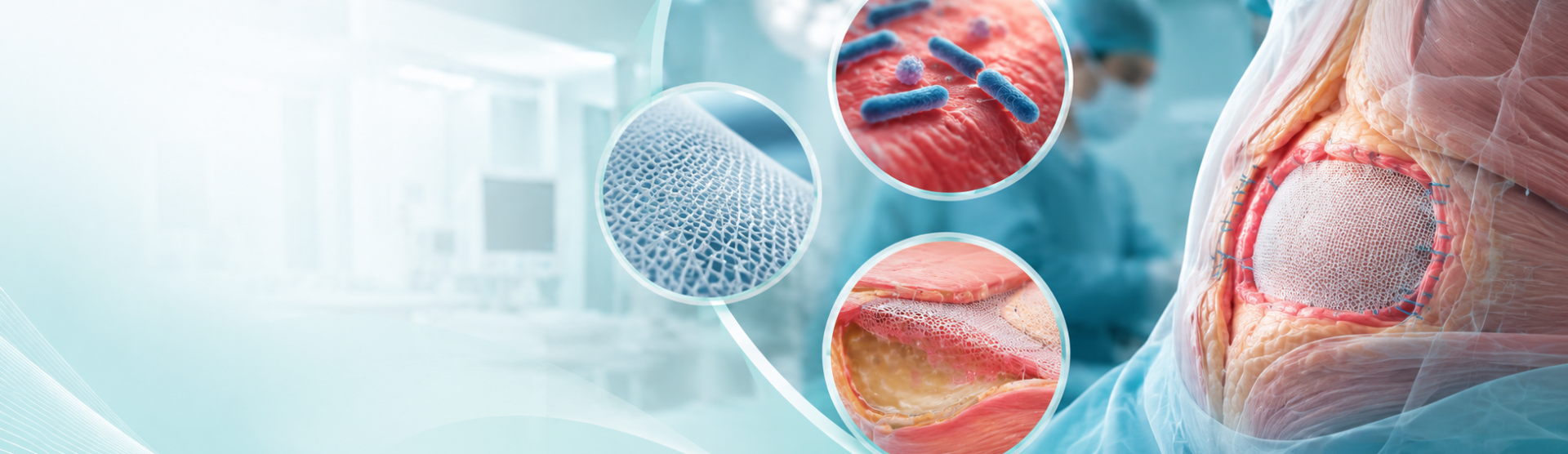
Management of Early Mesh Infection After Ventral Hernia Repair
Early mesh infection remains one of the most challenging complications in abdominal wall surgery. Management must be individualized, with decisions guided by mesh type, position, and infection severity.
🔑 Key Takeaways
• Mesh salvage is possible in selected cases
• Negative Pressure Wound Therapy (NPWT) plays a central role
• Explantation + antibiotics often yields the most definitive outcomes
🔄 Conservative Management (Mesh Salvage)
In carefully selected patients, mesh preservation is achievable using:
• Surgical drainage
• Debridement
• Culture-directed antibiotics
• NPWT
📊 Success rates:
• Overall NPWT salvage: 76–85%
• Macroporous polypropylene mesh: 93.5%
• Microporous polyester: 0%
• ePTFE: 14.3%
📍 Impact of mesh position:
• Retromuscular (sublay): 98.5%
• Onlay: 82.6%
• Intraperitoneal: 55.6%
⏱️ Timing matters:
Symptom duration >1 month significantly increases failure risk.
🦠 Microbiology:
• ~80% polymicrobial
• Cover S. aureus, Enterobacteriaceae, anaerobes
• Median antibiotic duration: ~13.5 days
❌ When to Remove the Mesh
Despite advances in salvage strategies, explantation remains the gold standard in many cases.
🚨 Indications for Mesh Removal:
• Composite, ePTFE, polyester, or microporous mesh
• Intraperitoneal mesh placement
• Enteroprosthetic fistula (~17.8%)
• Failure of conservative management
🔧 Reconstruction After Explantation
• Single-stage reconstruction with biologic mesh
• Retrorectus/underlay: 21.4% recurrence
• Bridged repair: 88.9% recurrence ❌
• Primary fascial closure → significantly lowers recurrence
• Consider staged repair in severe contamination
🧠 Clinical Algorithm for management of mesh infection
Step 1: Assessment
• CT scan
• Cultures
• Identify mesh type, position, timing
Step 2: Initial Management
• Broad-spectrum antibiotics
• Drain collections
Step 3: Decision Node
👉 Attempt Salvage IF:
• Macroporous polypropylene
• Extraperitoneal (onlay/retrorectus)
• Early infection (<1 month)
• No fistula
👉 Proceed to Explantation IF:
• Unfavorable mesh type
• Intraperitoneal location
• Late infection
• Fistula or failed salvage
Step 4: Reconstruction Strategy
• Prefer retrorectus biologic mesh + fascial closure
💡 Bottom Line
👉 Mesh type + position = key determinants of success
👉 Conservative management can work—but has ~30% overall failure rate
👉 Maintain a low threshold for explantation in high-risk scenarios
You might like these articles

Book Now