Your Health, Our Insights
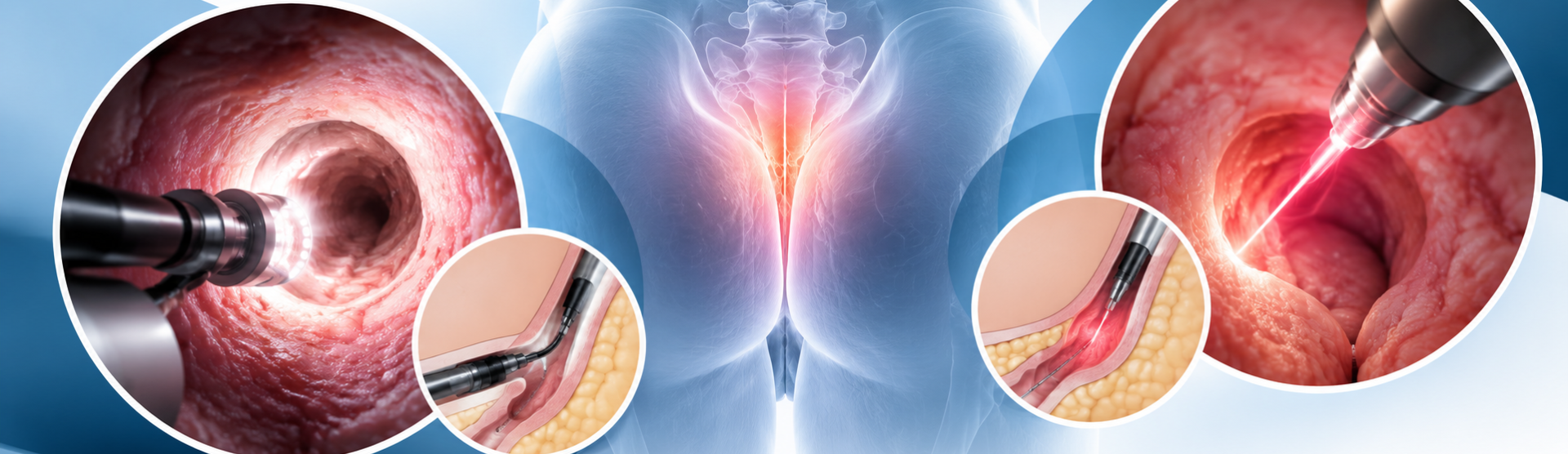
Endoscopic vs. Laser Treatment in Pilonidal Sinus Disease: Which Works Best—And for Whom?
Pilonidal sinus disease (PSD) is a notoriously stubborn condition—often affecting young adults, with chronic discomfort, multiple recurrences, and significant impact on quality of life. As the landscape of minimally invasive surgery evolves, two major players stand out:
👉 Endoscopic Pilonidal Sinus Treatment (EPSIT)
👉 Laser Ablation (with or without sinus excision)
🔍 EPSIT vs. Laser: Who Benefits Most?
✅ EPSIT Advantages
• Best suited for complex, recurrent, or multi-tract disease
• Allows direct visualization and complete tract debridement
• Highly effective in patients with:
• 🔁 Prior recurrence
• ⚖️ Higher BMI
• ➕ Multiple sinus openings or off-midline tracts
🧠 Insight: Healing rates with EPSIT in recurrent disease range from 82–87%, especially when combined with laser ablation of tracts and laser hair removal.
✅ Laser Treatment Advantages
• Ideal for simple, primary disease with:
• 🔹 One or two sinus openings
• ❌ No prior abscess
• 🧍 Lower BMI and limited comorbidities
• Can be performed under local anesthesia, with minimal downtime (return to work in 1–2 days)
🔬 Clinical Data: Recurrence rates <10% with laser alone in selected low-risk groups.
➕ Adjuvants That Matter
Regardless of the primary treatment modality, adjunctive therapies significantly impact outcomes:
💡 Laser Hair Removal
• Strongly recommended in complex/recurrent cases
• Reduces new pit formation and disease reactivation
• Safe across skin types
• Should begin preoperatively and continue postoperatively (weekly to monthly)
🛠️ Repeat Procedures
• Both EPSIT and laser therapies can—and often should—be repeated for persistent or recurrent cases.
• This is especially relevant in high-risk subgroups (BMI >30, multi-orifice disease, prior abscess drainage)
🧭 Treatment Algorithm for Pilonidal Sinus Disease
1️⃣ Initial Evaluation
• Assess number of sinuses, location (midline vs off-midline), prior infections/surgery, BMI
• Rule out acute abscess → drain if needed
2️⃣ Preoperative Optimization
• Hygiene, weight management, initiate laser hair removal (gluteal cleft)
3️⃣ Minimally Invasive First Line
• Simple disease → Laser ablation (± pit excision)
• Complex/recurrent disease → EPSIT ± laser tract ablation
4️⃣ Adjuvant Management
• Continue laser hair removal post-op
• Repeat EPSIT or laser ablation for non-healing
5️⃣ Escalation
• If minimally invasive approaches fail:
→ Consider flap-based off-midline surgery (e.g., Karydakis, Limberg, Lotus Petal)
6️⃣ Long-Term Surveillance
• Follow-up every 3–6 months for first year
• Maintenance laser hair removal for recurrence prevention
💬 Final Thought:
Both EPSIT and Laser Ablation have transformed the management of pilonidal disease—but success lies in matching the right patient to the right procedure, leveraging adjuvants, and repeating interventions when necessary.
You might like these articles

Book Now